Wikigyptian : Explore Ancient Egypt.
Wikigyptian is a personal exploration combining information design and AI tools. Starting with a rich body of content about Ancient Egypt, I experiment with new ways to organise, navigate and present knowledge. The project examines UX decisions alongside the limits of AI-assisted creation.
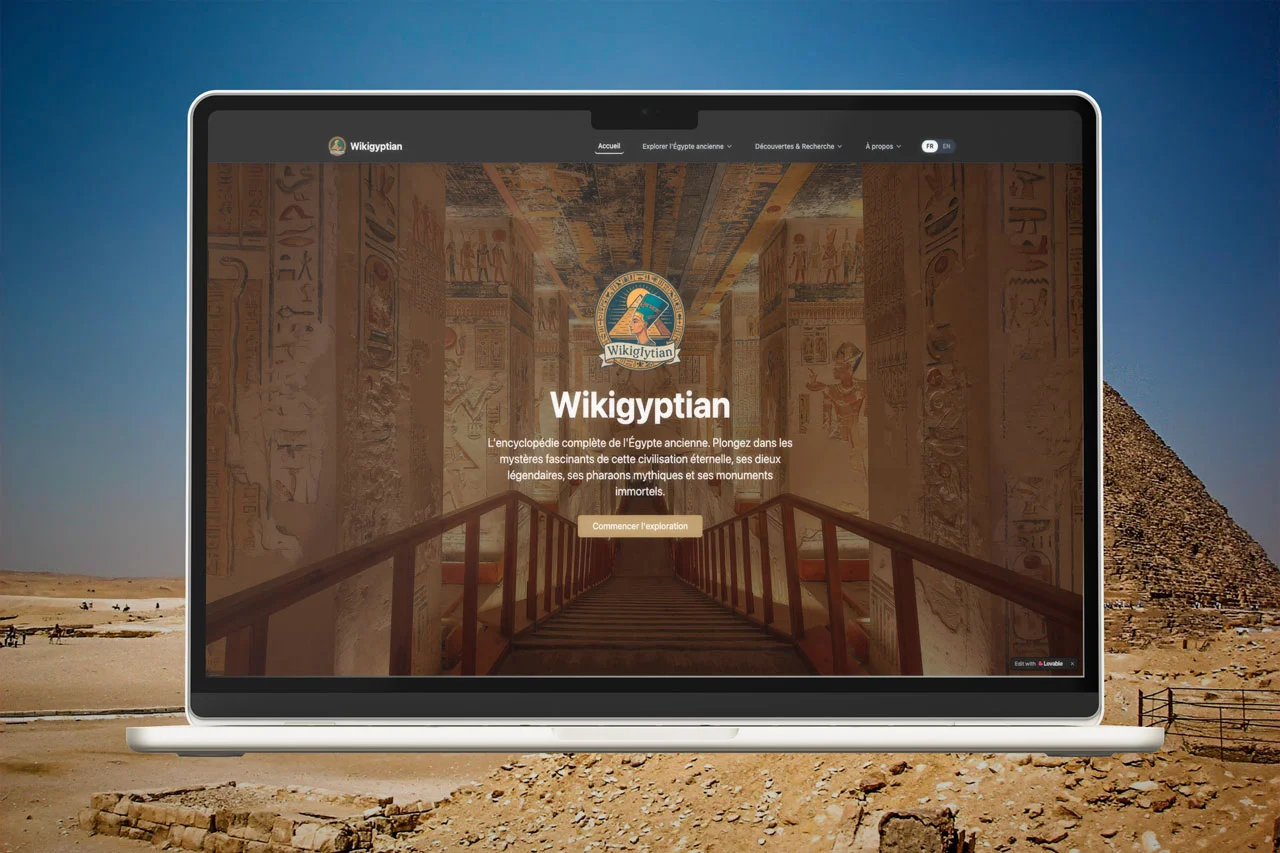
PRODUCT EXPERIMENT · AI 2026
- Design output
- Architecture
- Content organisation and relationships.
- Interface scope
- Responsive
- Desktop and mobile exploration.
- Maturity
- Prototype
- Exploratory build with Lovable.
A personal prototype drawing on GPT, Wikipedia and specialist websites. The work demonstrates information design, without claiming scholarly validation.
Create routes through knowledge, not just pages to read.
Start from an interest and a real friction
My interest in Ancient Egypt exposed rich but scattered information. Moving from a ruler to a dynasty or monument often means reconstructing context. That became the starting point for a personal educational project.
Work on structure before visual effects
A platform benchmark informed categories and relationships between periods, figures, monuments and mythology. Entry points should let one subject lead to another without losing context.
Structure material from different sources
The exploration draws on GPT, Wikipedia and websites about Ancient Egypt. I used that material to work on entry points, relationships between topics and reading hierarchy. The prototype tests a discovery experience; it is not historical research validated by specialists.
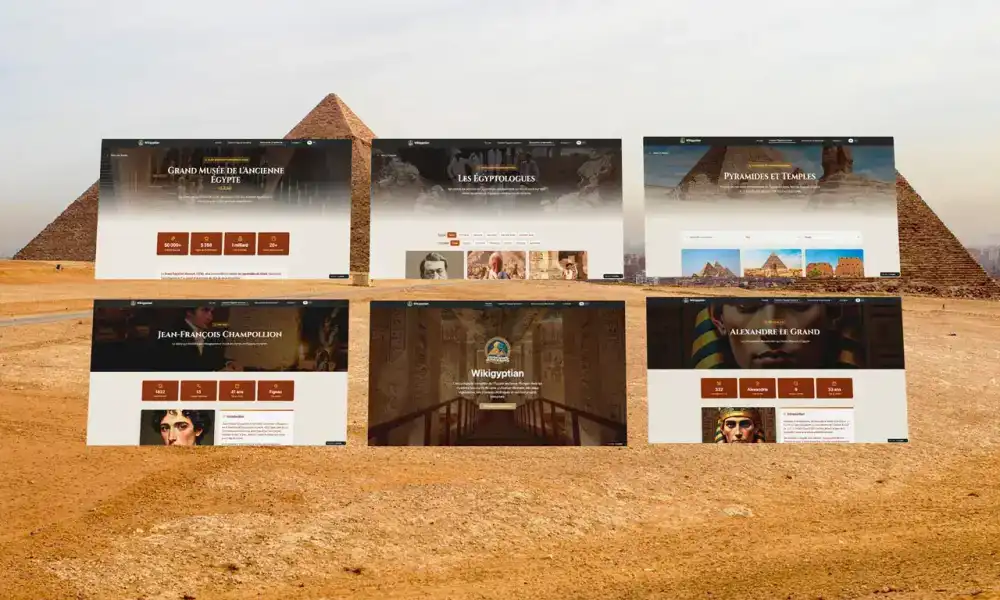
Museum, people and monuments organised within a shared visual framework.
Prototype with Lovable, retain product direction
Lovable supported building and iteration while I directed information architecture, UX and visual design, including mobile reading. Multi-screen views show the search for consistency.
What the experiment makes assessable
The outcome is a navigation prototype and AI workflow exploration, without measured learning or audience results. It makes a content structure tangible and exposes what needs validation.
Key design decisions.
What this project demonstrates.
Use AI to make an editorial direction testable while retaining judgement over information and experience.
Have a product challenge in mind?
Let’s discuss your needs, from UX/UI design to joining your team or creating a product.